Making a good piano tutorial video doesn’t need expensive gear or complicated setups. If you just want to get straight to the point and help people learn without spending hours on production, you can absolutely do that with a simple, clear structure and a bit of planning.
Here’s a straightforward guide to doing it well.
1. Planning and structure
Before you even press record, decide exactly what your tutorial is going to cover. It could be a pop song, a film theme, or a blues piece. The key is being specific.
Once you know the piece, plan how you’ll present it. A simple structure works best, and I usually recommend splitting the video into three clear sections:
First: a very short introduction.
Just say hello, state what the tutorial is, and get on with it. Keep it brief. Viewers generally don’t want to sit through long introductions – they’re there to learn the piano, not listen to a speech.
Second: demonstration and teaching.
Play the piece at full speed first so people know what they’re aiming for, then break it down slowly. Keep explanations clear but don’t over-talk or repeat yourself too much. Remember, people can pause, rewind, and rewatch.
Third: recap and difficult sections.
Quickly highlight any tricky parts and reinforce anything important. This helps tie everything together without dragging the video out.
2. What are you going to say?
A script often makes tutorials sound stiff and unnatural.
Instead, just write a few bullet points to guide you. That way you stay natural, but still cover everything you need to say.
If you try to read word-for-word, it usually sounds robotic and the flow suffers. A relaxed, conversational tone works much better for piano tutorials.
3. Keep the length sensible
Shorter tutorials are almost always more effective.
That doesn’t mean rushing, but it does mean avoiding unnecessary talking. Get to the piano quickly, show clearly what needs to be shown, and move on.
If something is complex, break it down efficiently rather than stretching the video unnecessarily.
4. Equipment
You don’t need professional studio equipment.
A modern phone camera is often more than good enough to start with. Most smartphones today record in excellent quality.
If you plan to make tutorials regularly, a simple video camera can be a worthwhile upgrade, but it’s not essential at the beginning.
5. Camera position
Two angles work particularly well for piano tutorials:
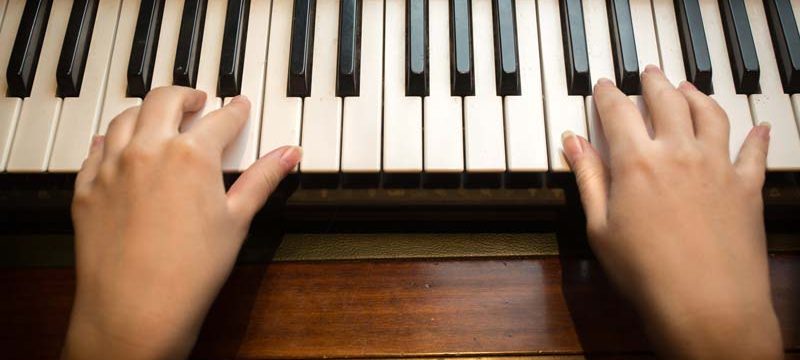
Overhead view – looking straight down at the keys.
This is very clear for learners, but can be harder to set up without proper mounting.
Over-the-shoulder view – slightly angled from behind you.
This is the easiest to set up and still shows hand positioning and key movement clearly, especially with a tripod.
For most beginners creating tutorials, the over-the-shoulder angle is usually the simplest and most practical option.
6. Lighting
Lighting makes a bigger difference than people think.
Make sure the piano keys are clearly visible and not in shadow. Natural daylight works well, or a couple of well-placed lamps.
Avoid strong shadows from overhead lights or lamps positioned too close to the keyboard, as this can make it hard for viewers to see what you’re doing.
Final thought
A good piano tutorial video is really about clarity, not complexity. If the viewer can easily see what you’re doing, understand it quickly, and follow along without confusion, then the video is doing its job.
Learn to play piano blues online with me
My online blues course teaches blues piano from scratch and builds your ability in a modular way. As you progress through the course, you’ll learn left hands, right hands, bridges and endings which you’ll use together to make your own blues piano compositions. I’ll show you the blues scale early on, giving you everything you need to start improvising – and we’ll progress to advanced licks and an impressive tutorial song to consolidate your new skills. Finally, we’ll move onto some popular blues songs, including music by the great Jerry Lee Lewis and my own personal favourite, Ray Charles.
I charge just £19.99 for 6 full months access, with 58 videos and counting – that’s less than the cost of a single piano lesson! – and I offer a 100% satisfaction money back guarantee.
Leave a Reply