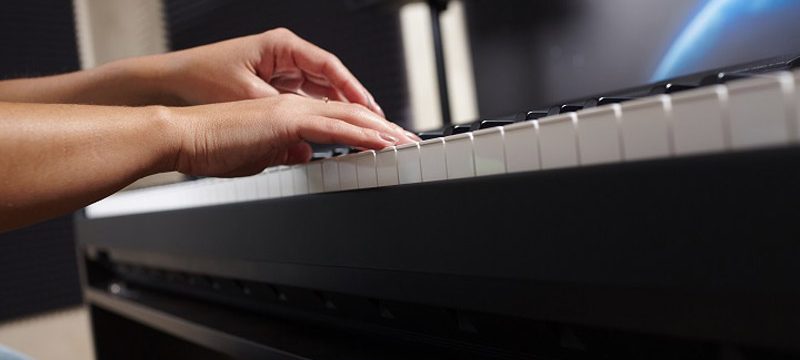
So you’ve been thinking about digging out an old keyboard from the loft, dusting it off, and seeing if you can still remember a tune or two. Or maybe you’ve ended up with a piano that’s just sitting there looking a bit lonely, and it feels like it deserves to be played.
Whatever your reason, you don’t really need an excuse to start learning — especially if you’ve always wanted to play blues or boogie woogie piano in the style of musicians like Jools Holland or Jerry Lee Lewis.
So… how hard is blues piano to learn?
This is a question I get asked a lot, and the honest answer is: it’s as hard as you make it.
That might sound like a vague answer, but it’s actually the most accurate one.
Like anything musical, becoming genuinely good takes time and practice. There’s no shortcut that replaces that. But blues and boogie woogie piano also have a very different learning curve compared to classical music, and that’s where things get interesting.
It’s not about hours — it’s about how you practice
One of the biggest mistakes people make is focusing too much on how long they practice rather than how they practice.
You’ll often see beginners sitting down, playing a piece from start to finish, stopping, and then repeating the whole thing again. It feels productive, but in reality it’s one of the least efficient ways to improve.
A much better approach is to break everything down into very small sections — sometimes even just a few notes — and repeat them until they become automatic.
It might feel slow at first, but it produces far faster results in the long run.
Why blues and boogie woogie feel more accessible
One of the reasons people are drawn to blues and boogie woogie piano is that you don’t necessarily need to rely heavily on traditional sheet music in the same way you do in classical piano.
Instead, you build patterns:
- Left-hand rhythmic bass patterns
- Right-hand riffs and licks
- Simple chord structures
- Repeating blues progressions
Once you understand the building blocks, you can start combining them and improvising quite quickly.
That’s why many people feel they can “get into” blues piano sooner than classical styles — because the structure is more modular and pattern-based.
A better way to practice
If you want to learn effectively, try this approach:
Take a very small section — even just the first bar — and work on it repeatedly until it becomes comfortable.
Don’t move on too quickly. Repetition is where the progress happens.
In fact, you might find that in the first 5–10 attempts, things feel awkward, but by the time you’ve repeated it several more times, it suddenly clicks. That’s completely normal.
Even experienced players still learn like this when tackling something new.
A word of caution
The biggest mistake is trying to learn something that is too difficult too early. That usually leads to frustration, not progress.
If something feels overwhelming, it’s often better to simplify it rather than push through blindly.
Final thought
Blues and boogie woogie piano aren’t “easy” in the sense that you can master them overnight, but they are very approachable if you learn them the right way.
And that really is the key difference: it’s not about talent or speed — it’s about method.
Or put simply:
If practice feels constantly difficult, you’re probably doing too much at once.
Learn to play piano blues online with me
My online blues course teaches blues piano from scratch and builds your ability in a modular way. As you progress through the course, you’ll learn left hands, right hands, bridges and endings which you’ll use together to make your own blues piano compositions. I’ll show you the blues scale early on, giving you everything you need to start improvising – and we’ll progress to advanced licks and an impressive tutorial song to consolidate your new skills. Finally, we’ll move onto some popular blues songs, including music by the great Jerry Lee Lewis and my own personal favourite, Ray Charles.
I charge just £19.99 for 6 full months access, with 58 videos and counting – that’s less than the cost of a single piano lesson! – and I offer a 100% satisfaction money back guarantee.
I’ve put this off for far too long. Boogie Woogie speaks to me and I hear it deeply. At 75 it will be more challenging than at 15, but what the hell let’s do it!
That’s a fantastic attitude to have! It’s never too late – good luck and feel free to message me if you have any questions whatsoever during the course. I always reply very quickly (within a few minutes or hours) and I am happy to provide ongoing support during your subscription for free 🙂
Well, I’m starting blues and boogie-woogie at 80, and I’ll race you!
Haha great news! The best style of music in the world 🙂
I am trying to learn Swanee river boogie
Think you can help me ?
I agree totally with your practice philosophy
Thank you for your question. Although I don’t currently have a specific tutorial video on the Swanee River Boogie song, you will find that the foundation of learning to play this is taught throughout my course. Swanee River Boogie is a very advanced boogie woogie piano song, and before you attempt such a tricky piece you would need to understand the basics of how to play boogie woogie and blues piano first. My video course teaches you how to play left hand boogie and blues piano as well as numerous right hand melodies. You also learn how to improvise for yourself! There are almost 60 tutorial videos that not only cover blues scales and how to play both hands together, but you also get to learn songs from legendary artists like Jerry Lee Lewis, Fats Domino, Ray Charles and much more. Check out my course page for a full list of the amazing songs you get to learn – https://www.learnpianoblues.com/the-course/